Phenol peels reach the deeper dermis. They are performed by physicians, usually with sedation and cardiac monitoring because phenol is absorbed and affects heart rhythm.
Recovery involves dressings, oozing and weeks of redness, and the skin may be permanently lighter afterward. The result for deep wrinkles is dramatic and long-lasting.
This is not a neighbourhood clinic procedure and it should not be. If a clinic near the village offers one, ask a lot of questions about who is performing it and where.
What "medical-grade" means
Nothing, legally. It is a marketing phrase.
What matters is the agent, its concentration, its pH, the number of layers applied and the training of the person applying it.
A peel that is "medical-grade" at a low concentration is a superficial peel. A trichloroacetic peel at a medium concentration is a medical procedure regardless of what the brochure calls it.
The law does draw a line. In California, an esthetician may perform treatments that affect the outer layer of skin only.
Anything that goes deeper is the practice of medicine and must be performed by a physician, or by a nurse or physician assistant under proper physician supervision.
Superficial peels are within an esthetician's scope. Medium peels are not.
A spa offering a "deep" or "medical" peel without a physician anywhere in the picture is either overselling a light treatment or performing a medical one without licence. Ask which.
What a Larchmont clinic will offer
Most neighbourhood practices offer a range of superficial peels and, if physician-led, medium trichloroacetic peels for suitable skin.
A few will offer a combination approach: a light peel over a course, with a medium peel once a year. Deep phenol peels are rare and generally referred out.
That is appropriate. The value of a clinic near home is that you can be seen quickly for the review and for any worry, not that it does everything.
Ask what agents they use, at what concentrations, and how they choose between them.
Ask how they prepare the skin beforehand, because a fortnight of physician-directed retinoid or a pigment-suppressing cream changes both the result and the risk. Ask how they decide who should not be peeled.
Peels also pair well with other work, and a good clinic will say when a peel is the supporting act rather than the main event.
One that offers skin rejuvenation as one option within a wider aesthetic practice across town, set beside lasers, injectables and thread lifts, can tell you when a peel is the wrong tool. Hold that one, like any other, to the questions in this piece.
A series of light peels before a course of skin boosters clears the surface the boosters then hydrate. A peel a month after a non-ablative laser can extend the improvement in tone.
And a peel is never the answer to a line made by muscle or a fold made by lost volume; the lines and volume hub explains which tools reach those layers.
Who should be cautious
Skin that pigments readily in response to injury needs particular care, and much of Los Angeles has skin that does.
Post-inflammatory hyperpigmentation, the darkening that follows any inflammation, is the main risk of peeling deeper skin tones and can outlast the problem the peel was meant to fix.
Careful clinics prepare such skin for weeks, choose gentler agents such as mandelic acid, build depth slowly across a series and treat pigment before texture.
The pigment guide goes into this in detail.
Other reasons for caution: a history of cold sores, which can flare across freshly peeled skin unless prevented; recent oral isotretinoin; active infection or eczema.
Keloid scarring, pregnancy and any recent procedure on the same skin also count. A clinic that does not ask about these has not screened you.
Recovery, described honestly
After a superficial peel: pink for an evening, tight for a day, light flaking for two or three. No one will notice unless you tell them.
After a medium peel: swelling and a sunburned look on day one. Darkening and tightness on days two and three.
Cracking and peeling from day three to around day seven, sometimes longer. Underneath, pink new skin that stays pink for a fortnight or more.
You will not want to be seen for a week. Plan for it. Do not pick at anything.
After either, the skin is more sensitive to ultraviolet light for weeks. This is where a bright neighbourhood works against you.
A hat, real shade and a mineral sunscreen reapplied through the day are the whole aftercare, and skipping them is how a good peel turns into new pigment.
Timing a peel around the neighbourhood
The village is small, and a peeling face is noticeable in a place where people stop to talk.
Readers plan medium peels for a quiet week: no market Sunday, no school event, nothing on camera.
Weather matters too. A dry, windy week is harder on healing skin than a marine-layer one.
Late autumn and winter, when the light is lower and the calendar is emptier, are the neighbourhood's peel season.
For the indoor days, downtown is a short drive and its galleries are dim.
Little Tokyo's JACCC keeps a calendar of exhibitions and a quiet garden that suit a face that should not meet the sun.
Closer to home, the neighbourhood's own calendar is a fair guide to when a peeling face will be noticed.
The meeting schedule of The Greater Wilshire Neighborhood Council is a reasonable proxy for it; a week without a community event is a good week to peel.
The consultation
Ask what agent, what concentration, how many layers and what depth. Ask how they will prepare your skin and for how long.
Ask what the peeling will really look like on day four. Ask what they do if the frosting is uneven or the skin reacts more than expected.
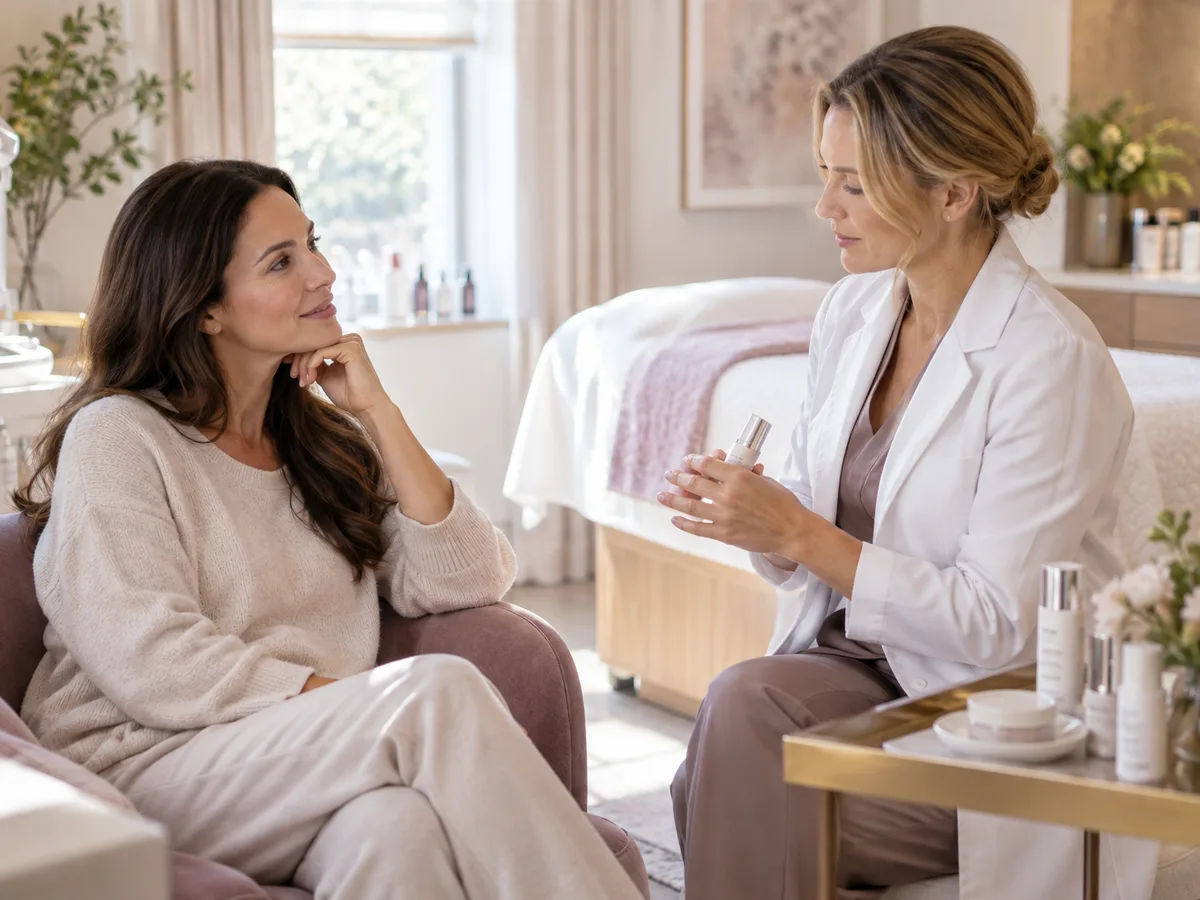
Ask who will apply the peel and what their licence is, then look it up. Ask whether they will see you within a day if you are worried.
Listen for hedging in the right places. A good peel practitioner is confident about the procedure and cautious about your skin. A poor one is the reverse.
The decision
Start superficial, in a series, with someone who examines your skin and asks about your history.
Move to a medium peel only for a specific reason, with real preparation, in a quiet week, with a physician's involvement where the depth requires it.
Treat aftercare as part of the treatment and sun protection as the price of the result.
In local use, the better question is not which peel but which practice. Advice about when a peel is the wrong tool is worth more than the peel.