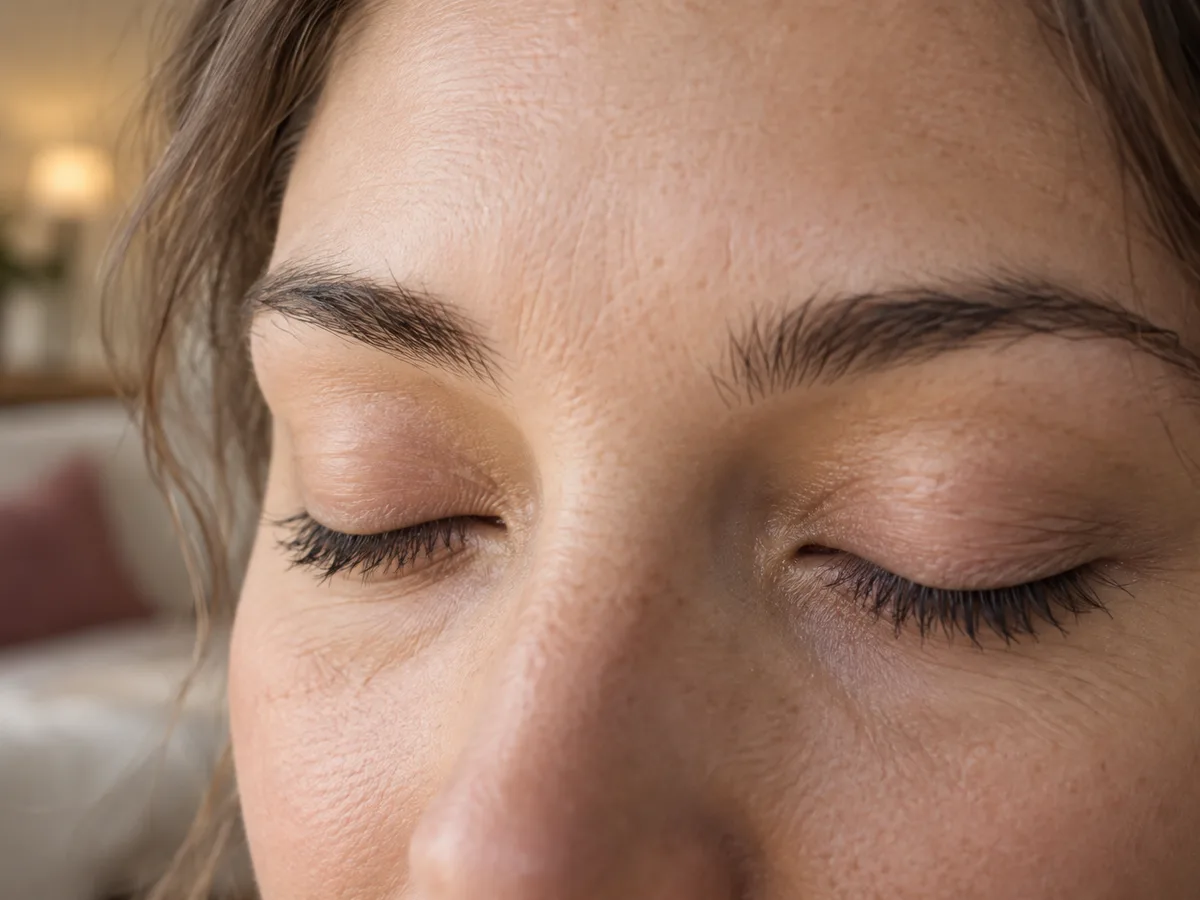
A dark circle is a colour problem, and it has several causes that look alike and are treated differently.
A shadow cast by a hollow, addressed as above.
Visible blood vessels through thin skin, which reads as blue or purple and is worse with fatigue, allergies and rubbing.
Skin thickening treatments help a little: a gentle retinoid, vitamin C, and over time, skin boosters or non-ablative laser to build collagen. Nothing removes it entirely. Concealer is not a failure.
Pigment in the skin itself, which reads as brown and is common in deeper skin tones and in people who rub their eyes with allergies.
This responds slowly to the same approach as other pigment: sun protection, gentle brightening creams under a physician, mild peels formulated for the area, and careful low-energy laser only with an experienced clinician.
Aggressive treatment makes it worse.
A clinic that offers filler for a dark circle without first working out which of these you have is treating a colour with a shape.
Crepey skin and fine lines
The thin skin under and beside the eyes crinkles early, from sun, from smiling, from dryness. Treatments that thicken and smooth it help, with modest results.
A retinoid formulated for the area. Small doses of neuromodulator to soften the crinkling at the outer corners. Skin boosters, placed very superficially in tiny amounts.
Non-ablative or gentle fractional laser, in a series. Microneedle radiofrequency with a fine tip made for the area. Light peels designed for the eyelid.
None of these makes the skin of a thirty-year-old. All of them together can make a fifty-year-old's eyes look rested rather than tired. That is the right expectation.
Puffiness
A word on the fourth concern, because it is often confused with the others.
Puffiness under the eye is usually fat that has pushed forward as the tissue holding it weakens, sometimes with fluid on top.
Filler does not fix it and can make it worse by adding volume beside a bulge.
Fluid puffiness responds to sleep, salt, allergy control and time.
Fat puffiness is a surgical matter, a lower blepharoplasty, and any non-surgical provider who says so early is being straight with you.
Sleep, allergies and the things that are not treatments
Before any of the above, the ordinary things.
Under-eye puffiness and darkness are worse after short sleep, salty food, alcohol and crying, and better after a week of the opposite.
Allergies cause rubbing, and rubbing thickens and darkens the skin. Treating the allergy, with a pharmacist's or doctor's guidance, does more for some dark circles than any cream.
Sleeping with the head slightly raised reduces morning fluid. A cold compress in the morning helps for an hour. Sunscreen and sunglasses slow the thinning and the pigment.
None of this is glamorous, and all of it should be in place for a month before a consultation.
An injector cannot tell what is structural and what is fluid in an under-eye that has not slept.
A clinic that asks about your sleep and your allergies before it reaches for a syringe is a clinic that has thought about the area.
Choosing the injector
If one area exists where the provider matters more than the product, this is it.
Look for someone who treats the under-eye every week, who uses a cannula, who places very small volumes deep against the bone, who under-fills and reviews.
Look for someone who talks about your cheek before your tear trough, and who turns some people away.
Ask how many under-eye treatments they perform in a month. Ask how often they have dissolved their own work and someone else's.
Ask what they do when the area swells for longer than expected. And ask, as always, what their licence is, then check it.
Injectors who treat the under-eye as an "add-on" to a cheek or lip appointment should be avoided for this area, however good they are elsewhere.
Recovery and the neighbourhood
Under-eye work bruises, and the bruises are in the one place sunglasses do not quite cover.
Swelling can last a fortnight and, in some people, longer. Plan a quiet stretch.
Readers often choose the run-up to a family visit rather than the visit itself. A vote-by-mail week or a stretch of remote meetings is also useful.
Residents who would rather not appear at a public meeting mid-bruise can keep an eye on neighbourhood meeting calendars through the city's EmpowerLA office.
Older neighbours ask about the under-eye more than any other group.
They should know that thin, loose skin makes filler a poorer choice and skin treatments a better one, and that surgery is not a failure of nerve.
The older-adult programmes at ONEgeneration are one place to hear from peers who have been through it.
The consultation
Ask which of the four concerns you have: hollow, circle, crepe or puff. Ask what causes your particular dark circle.
Ask whether your cheek needs support before your tear trough.
Ask whether you are a candidate at all, and listen for hesitation, because hesitation at this point is a good sign.
Ask how much product, placed where, with what tool. Ask what happens if it swells, if it looks blue, if you hate it. Ask who will inject and what their licence is.
Then, unless every answer was good, wait. The under-eye rewards the patient more than any other part of the face.
The decision
Name the problem before you buy the solution.
For a hollow with good skin, a small amount of filler placed deep by someone who does it weekly, after the cheek has been considered.
For a dark circle, a diagnosis first, then skin treatment or pigment work, and a comfortable relationship with concealer.
For crepey skin, a retinoid and a series of gentle treatments with modest aims. For puffiness, honesty about surgery.
In every case, the injector matters more than the product, and waiting for the right one is the luxury position.
After the basics, the working test is whether the clinician was willing to tell you no.